Tuesday, October 29, 2019

Shining Light on the Prairie -- Autumn's Last Call


Meteorological winter officially arrives December 1st. The vernal equinox not until three weeks after that.

Our first snowfall of the year is expected Thursday, trick or treat. The first killing freeze of the season is due the following morning and voilà, winter.

So this year, both science and the pagans are wrong.


The prairie's been creeping toward the dark for a while now and competition over what food remained on it turned fierce well beforehand. Yet early this month, on any given sunny day we hosted a dozen or more butterflies and maybe a score of bees, each claiming their shrinking share of perennial richness.

On the prairie in October, that's not guaranteed.


Moths, crickets and other beasties worked the night shift. We were like the 24/7 diner that never closed. If you don't know about those, look it up.

Then the first light frost tip-toed in on little predawn feet. Everyone knew it, but all hint of winter was quick whisked away in the glory of a sparkling autumn morning, as if it'd never happened.


Following the second frost, our highest butterfly count plummeted to three.


Bees became few and those were down to the Carpenters, working awfully hard for precious little.


Monarchs became passing strangers and have since moved on altogether. This was a great year 'round these parts for monarchs. I don't pretend that means they're 'saved' or anything like it, but still.


Curiously, milkweed bugs chose last week to make babies. They clustered together in the afternoon sun for protection and warmth and on cloudy days, the bug family vanished in grey chill. Meanwhile, their home steadily degrades beneath them and all around.


Life can be hard to spot now, even on wetlands.


Bedazzled by hues of burnished gold speckled with stubborn green and brilliant blues all struck together in splendid light, we tend to forget that's the mask of death, if not necessarily despair.


Now to find life this side of the dark season, you have to really look. Sometimes it's protected from the frost by a canopy of waving grass, floating muted in constant shade.


Mostly, you've got to get all the way down to the roots. Where air and water meet and meld with wet earth, life gathers strength for what's to come.


During most any given day over these last few months, I simply stepped out my back door into the sun and was surrounded by riotous life. I already miss my little friends. I believe I'll see them again.

Soon enough, Prairie Smoke we planted last spring will rise. On the underside of incipient green leaves will be baby fireflies, pin prick miniatures of their summer selves.

Dark-eyed Juncos will pass through on their way north, even as they have this week headed south. Spiderwort will bring early bees. The wild seed lupine that's had a full year now to get comfortable will finally show its true colors. Purple coneflower that did admirably well after a violent division, will next year thrive even more.

Myriad butterflies, bees and wasps will follow and the constellation of life will be riotous again.

On the cusp of darkness at the edge of northern ice, so I choose to believe.


Onward then, through winter.


Friday, September 27, 2019

Yondota Rocks


Eventually, all things merge into one, and a river runs through it. The river was cut by the world's great flood and runs over rocks from the basement of time.
                                                                                                       
                                                                                                       -Norman Maclean


Spend enough quality time wandering the wilderness and occasionally, a specific place might become sacred. For me, one of those is the short stretch of woods through which the Presque Isle River on its way to Superior cuts through hard rock at what we call Yondota Falls.


I know exactly when that started.

It was a misty autumn day when as young adventurers Johnny, Heather & I cooked lunch upon a carpet of damp moss covered in pine needles shaded by gnarled evergreens. But for the turbulent river below, all the world was at peace.

A bald eagle floated by just overhead, come down from near extinction to take a closer look at the trio of humans gathered in curious ceremony atop this slippery, sheer rock wall:


Or maybe it just smelled the meat cooking.

In any event, the place hooked me. My connection to it deepened through the decades until now, to the extent I recognize the word, it's sacred to me.


The first image of mine to ever hang in a gallery was of Yondota rock. In truth a pretty crappy photo, the gallery owner undoubtedly credited my enthusiasm but also recognized incipient value in my vision.

Most every person who ever visits merely stands on the stone to watch the water slip by and admire the general scenery, before heading back to the road and going on their way. Perhaps to the next set of waterfalls on the traveling list.

Instead, I'd seen the rock. And it's Yondota rock that keeps drawing me back.


In a wilderness almost entirely reconstructed of second or third growth forests and even the trees aren't the same sorts of trees there used to be, sites of authentic ancient resonance are rare. Sanctuaries hidden in deep woods where echoes of human history are wholly absent free the staggering resilience of life on earth to be manifest, and whispers older than memory can be heard plain.

These are landscapes made of lasting interrelationships fostered by complex organic symmetries predating humans by an extra wide margin. Having lasted so long the sites will likely outlive us since there, daily living retains natural integrity.

Inhospitable to us as the terrain may truly be, it's still infinitely more viable than we. At the very least, that should give us pause.


Born of vulcanism and in middle age broken by glaciers, the rock remembers before there was life on earth.

In our time, periodic high water sweeps the land clean. The river falls and off placid pools of rich fresh water trapped by inviolate stone, life flourishes. Then the river rises again.

What's hearty enough to survive until the flood recedes, does.


This ancient landscape would slough modern humanity off and deliver us in pieces downriver for Superior to disperse. We cannot live there. Happily, that leaves the most permanent wilderness to those who can.


Today when unintended consequence promises another great flood and what to do about that before it wipes us away is a Sisyphean riddle hiding a Gordian knot, we must draw strength that Yondota still exists. Because at this spot in the forest along the Presque Isle River, the natural relationship between water, stone and land that enables terrestrial life goes on unimpeded.

It's there to see. One need only look.

At Yondota Falls, moment frequently combines with light and in a backwoods pool one might capture the Earth's past, its present and perhaps even the future in a single glance.

To me, that's entirely sufficient evidence to accept the place as sacred.


Thursday, August 29, 2019

Bobcat Lake -- A Love Story


Two days and thirty-six years and ago, Heather married me.


Yeah, I married her too. Yet you can tell just by looking I was the dumb part of the deal and it'd never have happened had this formidable woman not chosen to take on such a nettlesome task.

I'm me, after all.


The first week of our honeymoon, we camped at the Presque Isle unit above Superior near the far western border of the Porcupine Mountains Wilderness. Shortly after arrival, I carelessly bounced the business end of an ax across the back of my hand.

Dr. Heather sprang to action and healed me. Today, I can't even find the scar.


We spent the second week of our honeymoon at Bobcat Lake, surrounded by the massive Ottawa National Forest. Our preference for both the spare, dry campsite atop the bluff overlooking mighty Superior and the messy one on intimately equal footing with swampy Bobcat was already well established.

If we considered any other destination to revel in officially sanctioned love, I don't recall it.


At seventy-six acres and maxing out at about eighteen feet deep, Bobcat is a modest lake. Most days a fitting venue for a canoe, even sometimes leeward the great forest when the breeze blows hard.


The thing about Bobcat Lake is that you're never, ever alone. Not even close.

Frequently, I hunt a bay alongside Bald Eagles. Sometimes I do better than the birds and they scowl at me.


But then, my game's different than theirs. Of necessity, raptors come to kill. Of necessity, I don't.

Not for decades now. Not since a seminal event in my life unexpectedly played out on a similarly gorgeous morning a few steps up from here, under the trees:


Used to be the main beaver works ran a long ways back toward the woods, where at that boundary the beavers engineered a complex series of step dams, complete with sluice gates. It was there we encountered a rare (for Michigan) Canada Lynx, still the only one in our experience.

While on the lake I've watched Osprey hit the water at speed, flap their wings twice to shed liquid diamonds, then rise with a fish and soar off into an azure sky above trackless wilderness.

At Bobcat, everybody eats.

One morning I sat frustrated in the canoe, shrouded by dense fog and becalmed on placid waters. Entreaty went unanswered. No fish came to play. I pondered my miserable fate.


Crunch…Crunch…Crunch, broke the dead silence.

I looked all around. Directly behind, an otter stood impossibly high out of the water, contentedly eating a fish while watching me.

"You're the reason I'm not catching anything," I scolded. The otter was unperturbed.

Often, at Bobcat I'm accompanied by loons. They're the signature bird of the Northwoods and much revered.


It's said loons are sensitive to our presence and we should keep our distance whenever possible. That's tough to do, when they follow you around. To date, I've managed to not take the loon's lilting song as laughter at my fishing prowess.

That stare, on the other hand…


Down from the beaver works where the inflow sent by the forest feeds the lake, there's a seasonably variable but otherwise permanent expanse of wild wetland. Look close when the light's just right and you'll find that strung along slender reeds waving in the breeze an entire kingdom of spiders thrives, suspended above the water, beneath the sky.

There's all manner of life there too. Well, call much of that ex-life. When the light's not right, the gossamer kingdom vanishes.


Though it can be sharp-edged and fraught to live at, the place is magnificently fecund.


At Bobcat Lake we've seen glowworms turn grassy shoreline into starry night. Predawn fog rise thick, then dissipate with the sun. We've watched towering storms bear down fast over the forest's crown, lightning leading the way. We listened as the woods above and all around roared with indignation at the lashing, with only a sheath of rip-stop nylon between us and the fury.

Always, the sun returns.

In warm weather or chill, still winds or fierce, caught in shimmering light or with midday turned to midnight on the storm, I love the diverse company found at my lake. No less so, the place itself.


Landscapes speak. Those we've not altered overmuch speak plain. Some offer a glimpse of what the world might be like without us.

Perennial host to riotous life and death, hidden by the mighty Ottawa Forest but for a winding gravel road out from hardscrabble Marenisco, little Bobcat Lake speaks not only to the myriad critters that call it home. It also speaks to me. And for that, I am blessed.

Plainly put, ours is a longstanding love affair. No more, no less. Don't worry, Heather knows and wholeheartedly approves.

So you'll understand how happy I am to have once again returned to the embrace of my love...


Thursday, August 1, 2019

Shining Light on Prairie Pollinators


Honeybee

Following a resolutely cold wet spring, summer opened similarly dismal. Everyone who wants to know already knows that pollinators – those myriad tiny critters without whose collective, dedicated labor humankind would fast dwindle then soon perish – are in trouble.


Silver-spotted Skipper

This year on the prairie, early season misery spread well into supposedly warm, fecund summer. Prairie plants held back on perennial richness like pregnant buffalo refusing to risk giving birth during a blizzard.

I nursed concern and everywhere, looked hard for hopeful signs.


Cabbage White

Among early arrivals that toughed it out were particularly hearty Red Admirals. They appeared early, came in force and are even now only a little worse for wear.


Red Admiral


But throughout the first half of summer, bees remained few and those there were worked hard for too little.


Carpenter Bee

Invariably, the days grew shorter. Then in July the heat waves came. Rolling storms threw warm rain not cold. With that, color finally intruded upon a world of resolute green.


Black Swallowtail

After the rains a good crop of fireflies emerged on our little patch. A positive delight now mostly spent, some stragglers still dance nightly to lingering cicada song.

Today marks the final third of meteorological summer. There's less ahead than behind. I know the feeling.


American Lady

Used to be, for me fieldwork meant traveling thousands of miles to periodically shoulder 50# of gear, then set off in search of failed construct and history being consumed by resurgent life.

I still do that work, but travel less and walk lighter.


Fiery Skipper

More often than not, fieldwork today means stepping out my back door and peering past our world of construct, sometimes right down to the heart of the matter.
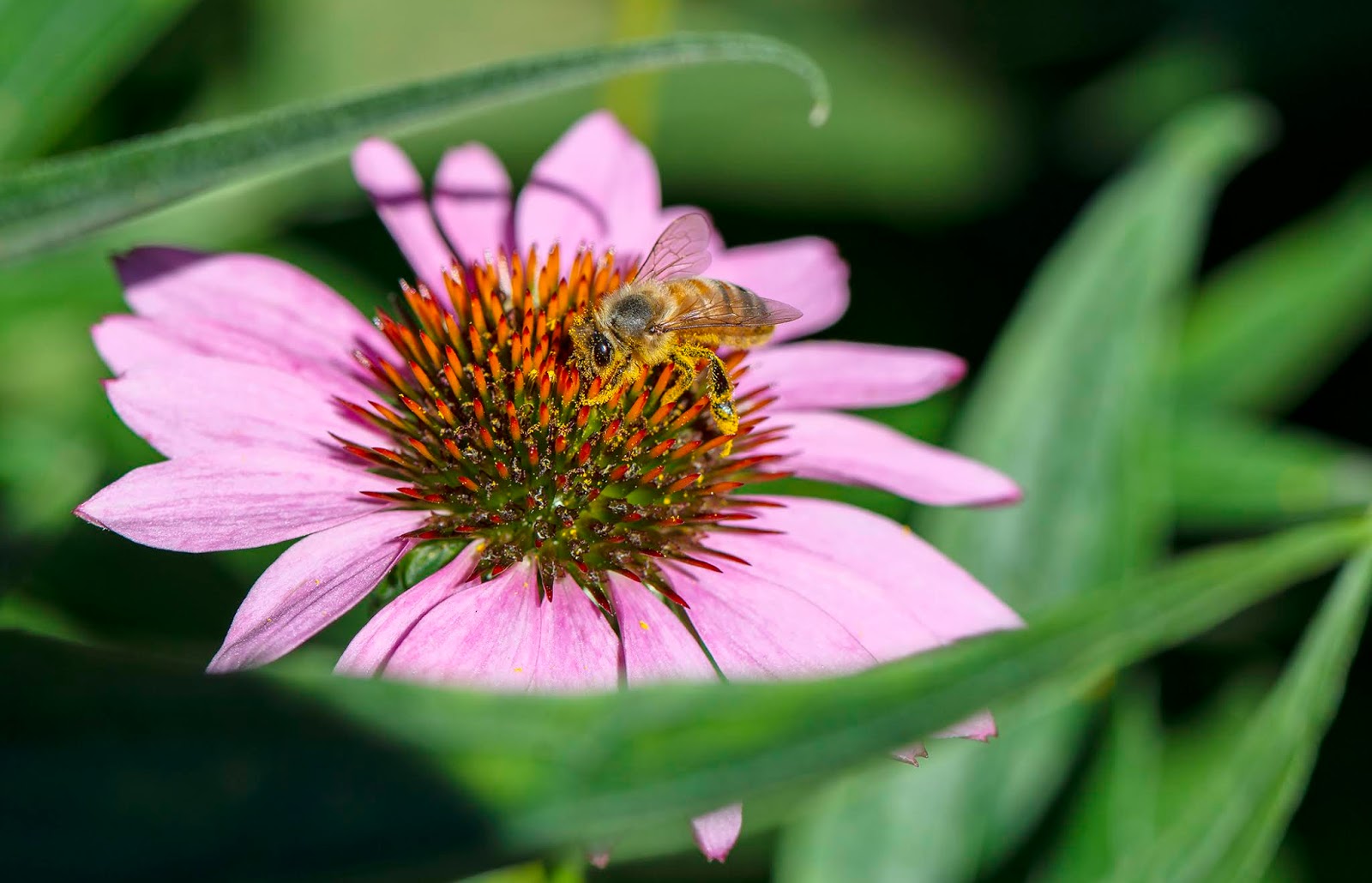

Milkweed Blossoms

What's true is that soon, the season of soft fading light will again be on us.


Sweat Bee (Or a Hover Fly, maybe...)

Counting the days down from here, autumn is just over the horizon. Beyond that lurks winter, a ravenous cold beast.


Great Black Wasp

With proper summer, the bees returned. In bright sun, all manner of them swarm the bolted oregano. So for a bit longer yet, even the least if most sorely imperiled among us get to eat.

And as they go, we go.


Honeybee