Thursday, May 18, 2023

MINONG – The Misty Isle Emerges

This is the 2nd part of my friend Philip J. Kucera's Isle Royale expedition.

Access the 1st part here. 


Departure prep. Kayakers in fog, morning mist. Courtesy Jeff Price, ©2022


Approaching Isle Royale by ferry in a dense Lake Superior fog, the 45 mile long "Rock" can loom into view in an instant under a clearing blue on blue as the vessel begins to maneuver through the sinuous Smithwick Channel to dock at the Rock Harbor complex. Fear not armchair traveler, the ship captains have navigated these waters before.


Isle Royale possesses a mystical quality for visitors. Sailing from Michigan's U.P. on a hot, muggy midsummer day, a first sighting might find the island floating far above the horizon, a long thin line of haze. Mirage? Temperature inversion? A Fata Morgana, if you're a reader of Arthurian legend. Islands do carry a certain mysticism…detached as they are.


French missionary Claude Dablon wrote in the Jesuit Relations of 1669-1670 that Indian canoeists told him the island floats. "Sometimes far off, sometimes near, according to the winds that push it and drive it in all directions." Can that be the work of Ojibwa trickster Mishipeshu?

Some sense the primordial as they tread thousands year old footpaths through mossy coastal glades, pondering bogs rich in exotic plants…


…or are stopped short by the raucous jungle cry of pileated woodpeckers weaving suicidal through close forest growth, with "Old Man's Beard" lichen dripping morning dew.

The midcontinent suffered a violent birth over a billion years ago when volcanoes spewed mountain building lava flows and a gigantic rift tore the land apart, creating what would become the Lake Superior Basin. The intense heat is visible today in the fiery blacks, grays and reds of Isle Royale's basalt basement rock.


Over eons, mountains eroded to sediments that eventually compressed to stone. Mile thick glaciers arrived, scraping away the intervening soft rock to expose the mass of hard basalt, Isle Royale's backbone. Glacially gouged shore faults play host to subalpine vegetation today…including the ever-present harebell.


The last glacier closed the Ice Age about 11,000 years ago, its meltwaters filled a deep wide rift and the floating island emerged bobbing in Glacial Lake Minong…Lake Superior.

Earliest humans followed the great melt, hunting mastodons and saber-toothed cats as well as many other cold climate creatures to extinction. They visited the island chain from 6,500 to 5,400 years ago, mining veins of copper and silver exposed on bare rock surfaces.


From the Philip J. Kucera Collection


Long lines of deep excavations are scant evidence of their activity, along with tens of thousands of notched stone hammerheads, most broken, now hidden under accumulated duff.


Cold wintery winds sent the ancients packing south with their metallic treasures, striking for Cahokia, an Archaic Era trade center for the continent. Sited near the confluence of the Mississippi, Missouri and Illinois Rivers, the vast marketplace filled with highly skilled artisans, some of whom beat raw copper into tools, weapons, and exquisite hammered repoussé ornaments.

The miners eventually disappeared into the mists of time…and the island rested.

Near five hundred years ago the Ojibwa settled the upper great lakes, guided by the "Megis" sea shell and ending a long migration from the Atlantic coast in search of turtle islands. The tribe aptly named the place "Minong," The good place. And it was.

Caribou and moose were hunted, fish were abundant in island lakes and offshore. They picked thimbleberries, gathered ceremonial and medicinal herbs, and returned to their mainland winter camps well before the snows. You'll find three dioramas depicting Native activities on the island on lounge walls of the large park service motor vessel, Ranger III.


In the late 1830's the American Fur Company established nine seasonal fish camps on the island, supplying fur trade canoeists -voyageurs- sustenance for 'the road'. Large catches of lake trout, whitefish and herring were hauled into Mackinaw boats, a craft that supplanted birchbark canoes on the big lake. Fish were salted and packed in wooden barrels coopered from island trees, shipped to lower ports.


Courtesy Michigan Technological University Archives and Copper County Historical Collections


Beaver were trapped from the 1600's into the mid-1800's, mainly for the felted hat market – the rage in the "Old World" back then. Fur trade declined throughout North America as over-trapping almost annihilated the beaver population. Fashion trends change, if slowly at times.

The American government appropriated Indian land in Superior Country through a series of treaties during the 1840's. One treaty added Isle Royale to its list of acquisitions. The island was purchased for $400 dollars in gunpowder and $100 dollars in fresh beef.

(Reference: the 1844 Isle Royale Compact.)

Prospectors soon swarmed the island 'discovering' copper in the ancient workings. Minong Mining Co. owners paid a couple to "winter over" to protect their newly acquired property from claim jumpers. Among the few through the centuries to take on the winter challenge, here's their harrowing story.

Scandinavian immigrants began settling the island before the turn of the twentieth century. The rugged beauty and low fjords of Isle Royale reminded them of home…and fishing was a way of life they knew well.


They adopted the Mackinaw boats, "The greatest surf boat known," rowing or sailing the small open craft to fishing grounds often miles from shore, in weather fair or foul. Worked daily for decades, the boats were eventually powered, renamed "gas boats" by locals. "Belle," built in 1928, sitting landlocked today at Edison Fishery, served its masters well to the close of commercial fishing in the early 1950's.


To carry their families through lean years, fishermen built rental cottages to house occasional island visitors. Resorts quickly sprung up to handle increased tourist traffic arriving by steamship. They came for "the airs," for hay fever relief and to escape hot, crowded, smoke-clogged lower lakes cities. They came to experience the wild, to view wild creatures and they filled the resorts for entire summers.


Courtesy Michigan Technological University Archives and Copper County Historical Collections


A few purchased land, even islets, and built cottages large and small. They paid fishermen to caretake their properties, and guide "Sports" to ancient fishing grounds.


Each year, as chill autumn winds stirred – before Lake Superior turned mean, they packed their trunks, shuttered cabin windows and hauled boats high ashore beyond the grasp of gale driven combers. Heading back to the mainland, they left the isle to battle the winter spirts alone.

And once again, the island rested.

Thursday, April 6, 2023

35mm Artifacts – Landscape and a Universe of Plants


Of course even as I chased wildlife phantoms through the woods, I shot the environment around me. Enjoyed a better ratio of success with that, as well.


And who wouldn't?

By & large, landscape doesn't fly, leap or otherwise steal away right before your clumsy eyes, as does the average critter.

For instance, I captured this while relaxing flat on my back across deep forest loam, during the very best light near the end of a positively splendid autumn day.

If any bug bit me, I don't remember it.


Landscape waits patiently. It tends to stand still. Sometimes, preternaturally so.


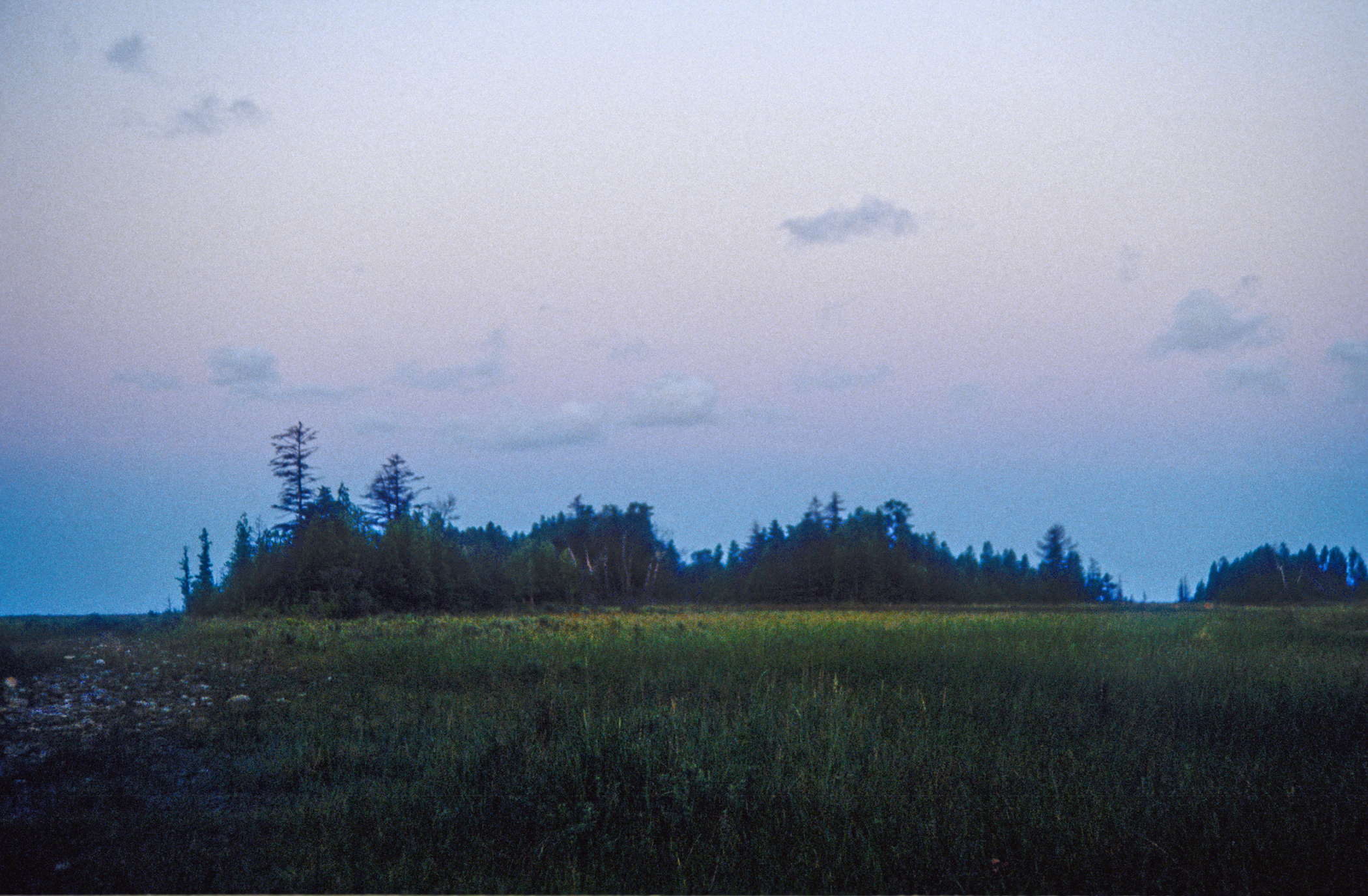
Among the first if probably not the very first landscape image I ever shot is below. Not a 1st class image per se, but true to the wilderness moment just the same.

I've always thought what this image really lacks is some kind of smallish,  dinosaur-like critter peeking out from the grass:


No disrespect to those who love them, but I pretty much stopped shooting sunrise/sunsets real early on. Mostly, I think those exist to be savored.

Not squandered through a lens and provided desperate triage later.


When it comes to visually rich landscape, size really does matter.

I was seriously embarrassed when the first prints of mine ever to hang on a gallery wall barely held up to 11x17.

That was positively puny, considering the intended content.


In theory, the image below needs to cover a good chunk of wall, maybe in some busy motel hallway.

But it never could:


Size was also the rub every time the devil came in on a landscape's details. If I wanted to do this sort of thing at a high level, then I couldn't stay small...


Increasingly, I felt caught between a photographic rock and a hard place, as regards Superior landscape.


Happily I kept finding diversions along the way, as I learned how to see the wild world through a proprietary lens.


Thursday, March 23, 2023

35mm Artifacts - Wildlife


I brake for turtles. 


Early on in my then still nascent shooting career, I understood I'd never be a wildlife photographer.


It wasn't that I couldn't, necessarily. It was that I wouldn't. Too many complications stood in the way.


In essence, I'd have needed to uproot my entire life to legitimately chase that dream. No wildlife on the prairie to speak of, back then.

Little buggers, mostly.


And of course birds. Which no matter what size or location are damned fast and generally required specialized gear to do really well.

Stinkin' birds know you're there before you do.


Plus, I already knew Heather. That settled that.


So as with other youthful dreams, 'northwoods wildlife photographer' went in the bin.


Right on top of "I want to be a field herpetologist when I grow up."


Just because I'd prudently surrendered a frail dream doesn't mean I ignored opportunity on the wing.


But wildlife capture became strictly a crime of opportunity, not a goal. After the Linhof, I rarely if ever did it at all.


Meanwhile, my eye wandered in the woods while I happily continued to take what what came.


Repeat failure piled high.


I learned to look with fresh eyes at the real world through a lens.


Necessity became the mother of creative invention.

But as ever, I continued to brake for turtles...


Thursday, February 16, 2023

Snow Eagles


Ice storm today.

No ton's of showy snow like distant years past, but still. A new normal.

Speaking of eagles..


Late 70's probably, word came to the prairie that bald eagles were again wintering around dams along the Mississippi River. Heather and I set off to see for ourselves.

And we did. This one, an immature bird beset on the ice by crows:


Then while trudging through yet more snowy woods towards yet another brisk overlook on the mighty river, at a small clearing in quiet forest we found these.


It'd never occurred to us that eagles made snow angels.

On a winter afternoon spent roaming high above the Mississippi River back when only a few eagles were anywhere, they taught us better.


#snow angels

Thursday, January 19, 2023

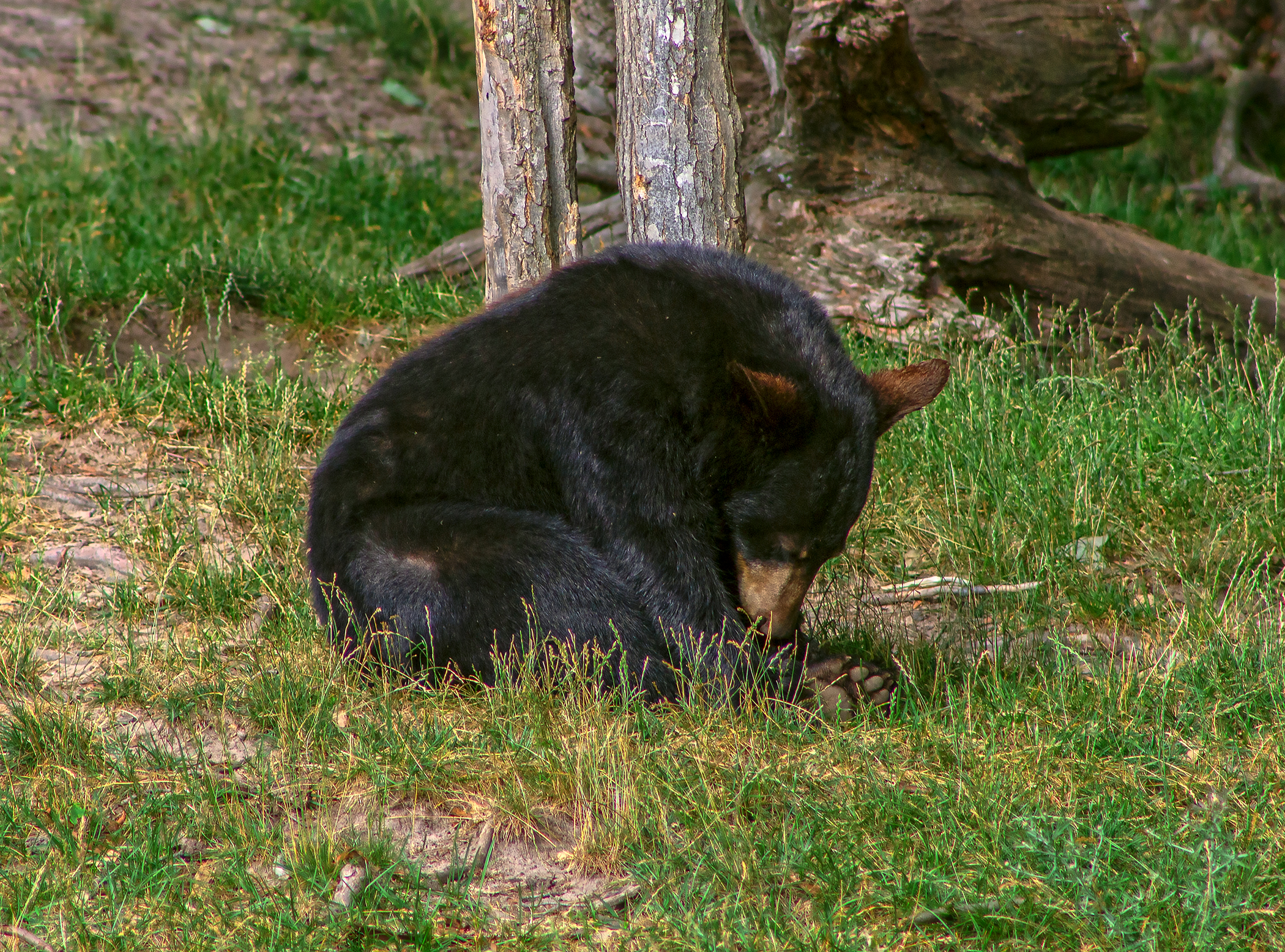
An Embarrassment of Bears


First appropriated then liberally reconfigured to better suit the needs of a New Age, spirit animal is today a fraught term. Nonetheless, the all knowing Internet informs us one's spirit animal may change with the seasons of life.

Whatever they're properly called and wherever they come from, all I can say for certain is that mine have.

When still a young man, it was definitely an eagle. I get that's inexplicable.


Then, the lower 48 was down to about 400 breeding pairs of Bald Eagles, where once the national bird (no less) had widely thrived. Not one of those was anywhere near my childhood prairie.

Remnant hawks and the occasional passing falcon ruled there. I didn't know jack from eagles.


But the Northwoods is bred into me. And what youngster doesn't want to soar, one way or another?

Eagle it was.


Then during my prime, I came to know the wolf best.

In 1974, they released four grey wolves into Michigan's Upper Peninsula. None of those lived, because one way or the other we killed them.


Except by then northern wildness wasn't just in my maternal blood, as with each passing year I'd thrust everything I had ever farther into it.

One might soar above the great forest, yet never truly know it. Deep woods must be prowled for to know.


I determined to prowl. Wolf it was.

Though there weren't any of those yet in my vast northwoods. So it's not like I'd any earthly experience with wolves, either.

Eventually the grey wolf returned to its ancestral forest flown over by eagles. Including the one who once stared me down with the most sentient eyes I've ever seen.

No fear. No aggression. Just... Well?

Well indeed.


Today we've a sizable population of eagles, nationwide. They even soar over my native prairie.

Transient wolves are occasionally reported on the flatlands. Most of those are dogs or coyote. What wolves there've been typically prowl down from the north on their way somewhere else, provided they survive our patchwork passage.

Same's true for black bears, of late.


Like Boy Scouts, bears do their best to always be prepared.

That sort of thing requires advance planning executed on an ad hoc basis through perpetual maintenance and bears are experts at it.

So apparently, bears dig efficient workflow. I'm down with that.


When opportunity presents, they make themselves completely content better than any ever-watchful eagle or hyper aware wolf can. It's in bears' nature to do.


They like apples, too. Maybe that's just coincidence, but still.


I'd bet any old bear currently hibernating in a hole beneath a northern blanket of snow knows what time it is.

That while the cruelest of winter might well lie ahead, the shortest of its days are behind. As yet one more winter in a growing long line rides seasonal gloom toward resurgent green spring, wildness translates the word.


And still for today, the best bet is to dream on.


Bear it is then.